Most “website examples” lists show you Airbnb, Dropbox and award-winning portfolio sites. They look great, but they will not help a civil contractor in Gosford or a pizza shop in Lake Haven work out what their own site needs. Big brands have different customers, budgets and goals.
Here are real Australian small business websites, grouped by industry, with a plain note on what each one does well that you can copy. Every example is a live site, and where the business has a measured result, it is listed.
Disclosure: every site on this page was built by Keener, the studio I run. That is why I can tell you the results and the thinking behind each one. Treat them as worked examples, and look at what they do, not who made them.
Key Takeaways
- The best small business websites answer the customer’s first question in the headline: what you do, for whom, and where.
- Proof sits near the top on every strong example: reviews, years in business, licences, numbers.
- Each core service or product type gets its own page, which helps both customers and Google.
- The main action (quote, book, order, register) is visible on every screen, including on a phone.
- Industry changes the details, not the fundamentals.
What every good small business website has in common
The same pattern runs through every strong small business site, whatever the industry. The Australian Government’s business.gov.au website guide advises designing for mobile and desktop, making the site accessible, and planning pages around “the tasks customers will want to do on your website”. In practice that means:
- A headline that names the job and the area. No “Welcome to our website.”
- Proof in the first screen or two. A rating, a licence, years of experience, a number of jobs.
- One page per service, product range or audience.
- A clear, repeated call to action that matches what the customer wants to do next.
- Location signals for local search: suburbs, regions, an address or service area.
Trades and construction
Trade customers want three answers fast: can you do my job, do you cover my area, and can I trust you on my site. The best trade sites answer all three above the fold.
Booms Up Civil Group (civil contractor, Central Coast NSW)
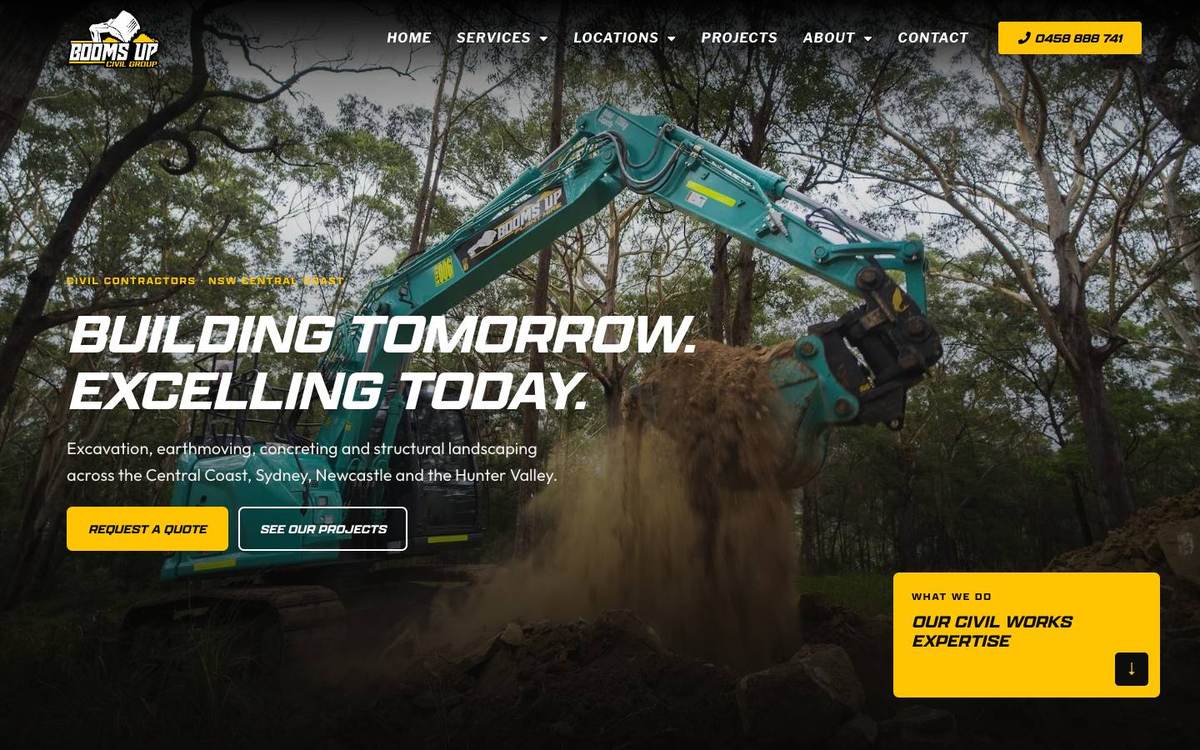
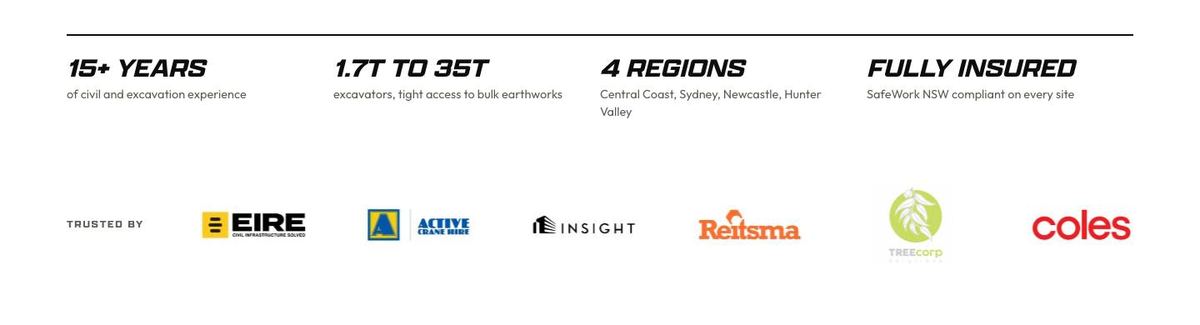
Booms Up had no previous website. The homepage headline, “Building tomorrow. Excelling today.”, is backed straight away by a plain line listing excavation, earthmoving, concreting and structural landscaping across the Central Coast, Sydney, Newcastle and the Hunter Valley. Under that sits a proof strip: 15+ years of experience, 1.7T to 35T excavators, four regions, and “Fully insured, SafeWork NSW compliant on every site.”
Result: 350+ conversions in 12 months (website, SEO and short-term ads).
What to copy:
- Service and location pages. The menu has a page for each service and each region, and region-specific service pages such as Central Coast excavation and Newcastle concreting. That structure matches how people search.
- Projects with place names. Recent jobs are titled by service and suburb, such as “Residential sandstone retaining walls and garden beds, Kariong.” That is proof and local search in one line.
- Phone in the header and a quote form at the bottom, with a promise of what happens next: assess the site and come back with a clear quote.
Advoltage Electrical (electrician, Brisbane)
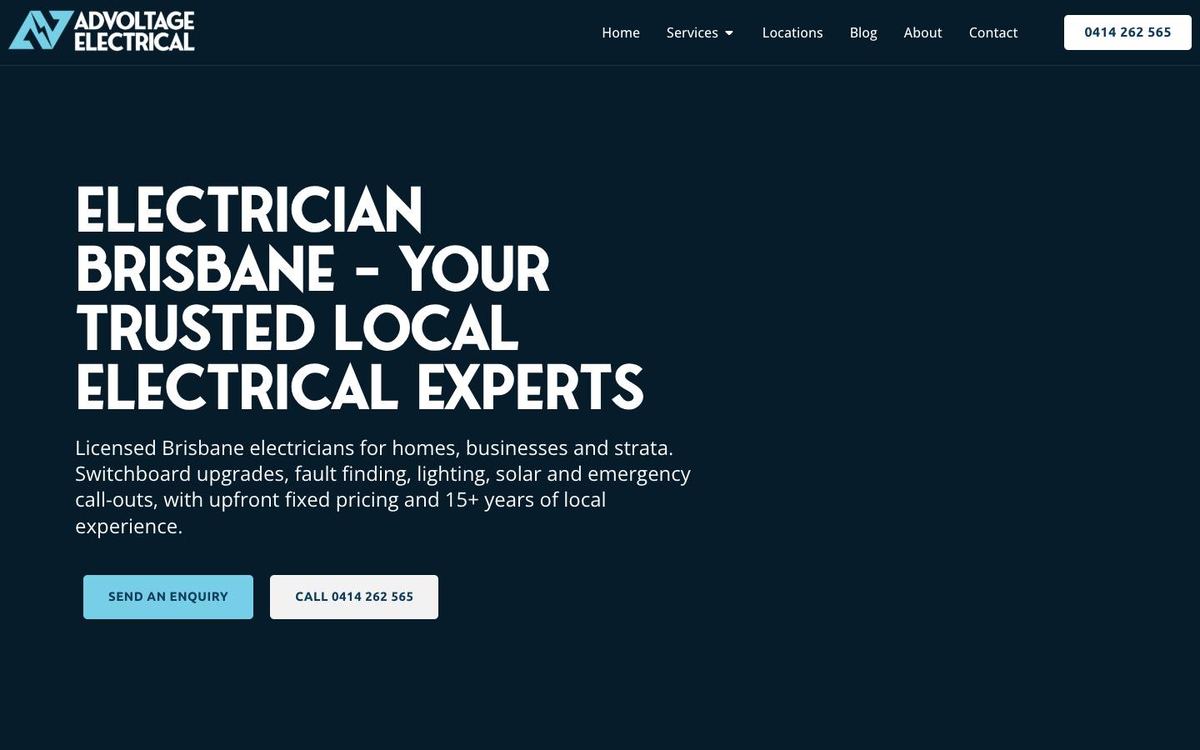
The Advoltage homepage title and headline lead with “Electrician Brisbane,” then a supporting line covers licensed electricians, the main services, upfront fixed pricing and 15+ years of local experience.
What to copy:
- A deep service menu. Separate pages for switchboard upgrades, safety switches, smoke alarms, solar repairs and more. Each can rank for its own search.
- A helpful blog that answers real questions, such as how long a solar inverter lasts and how often smoke alarms should be replaced in Brisbane.
- Pricing language in the hero. “Upfront fixed pricing” answers a worry before the customer has to ask.
For more on trade sites, see our page on websites for tradies.
Allied health and NDIS
Health and care visitors are often stressed and short on time. They need to know you treat their situation, that you have availability, and that the process is simple. Families and support coordinators are often different audiences, and the best sites speak to both.
Little Fuzzies (paediatric allied health, Adelaide)
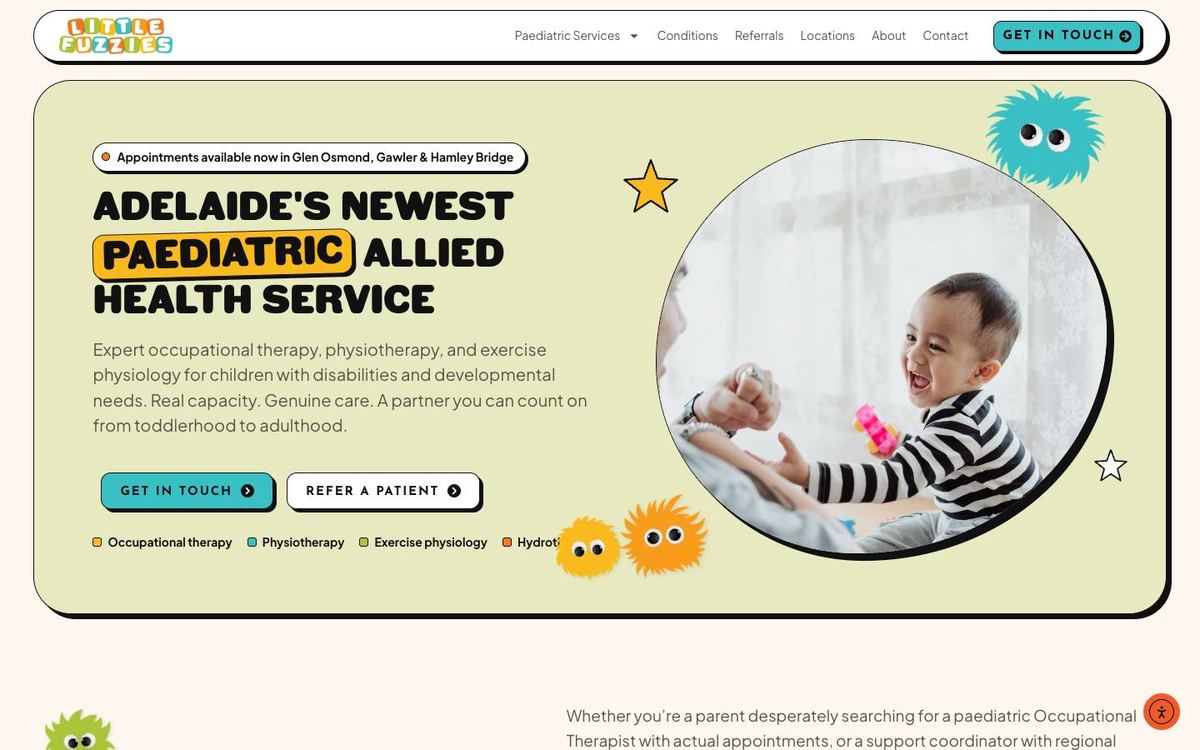
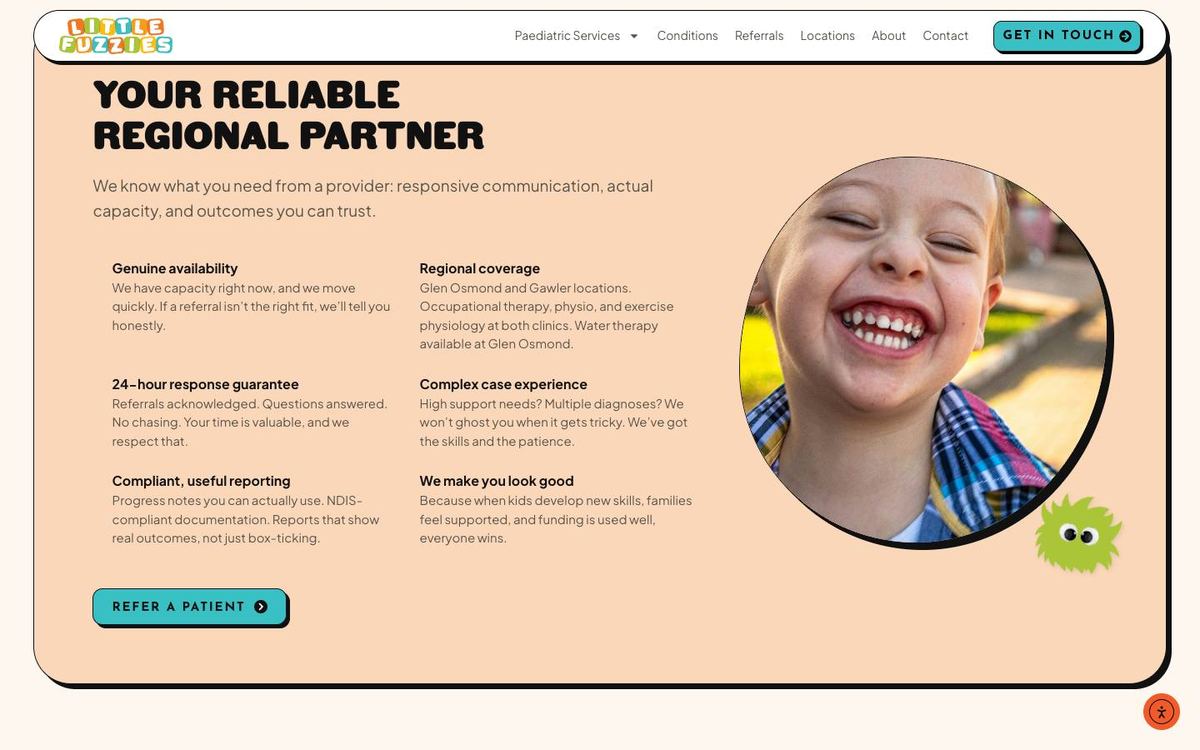
The headline is “Adelaide’s newest paediatric allied health service,” above a banner reading “Appointments available now in Glen Osmond, Gawler & Hamley Bridge.” The page then names the problem families face, waitlists, and answers it: “No 12-month waitlists.”
Result: 145+ conversions in 3 months (brand and website).
What to copy:
- Two calls to action for two audiences. “Get in touch” for parents and “Refer a patient” for support coordinators and plan managers, each with its own section further down.
- Conditions and services listed separately. Visitors can find their child’s condition or the therapy they need, and each links deeper.
- Concrete promises. A 24-hour response guarantee for referrals and NDIS-compliant reporting, written in plain words.
Care1 (NDIS disability and complex care, Sydney)
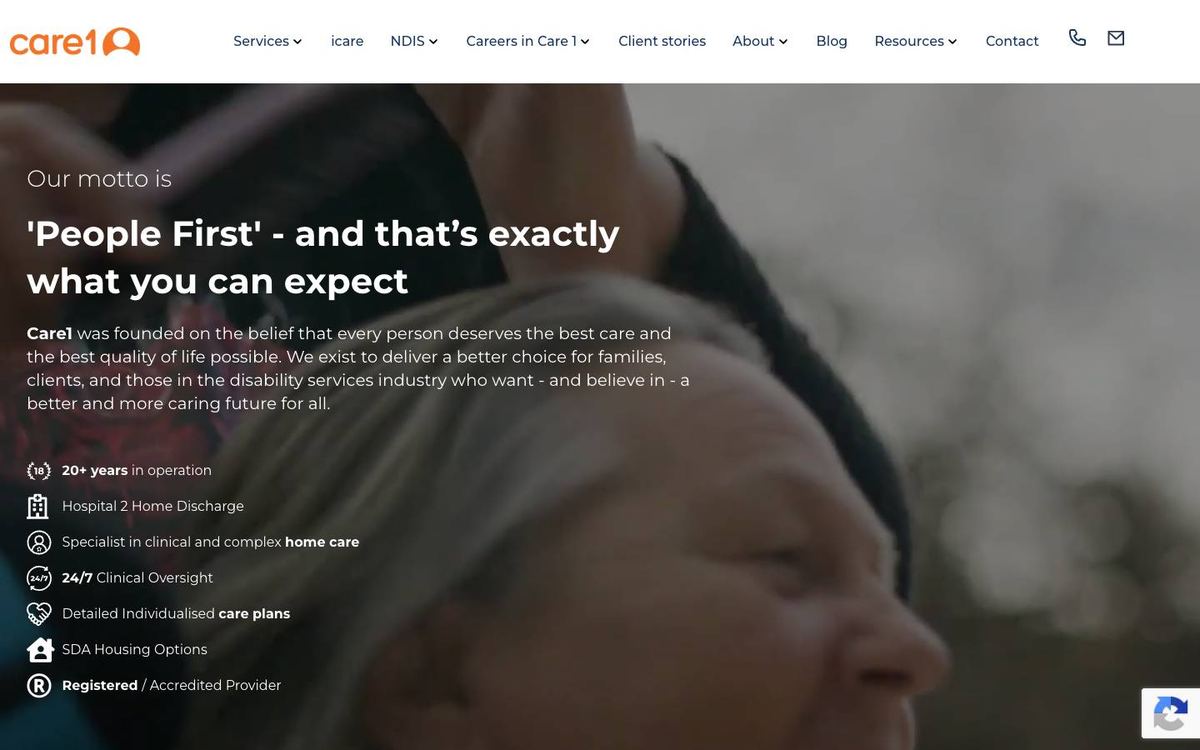
Care1’s homepage leads with its “People First” motto and a proof list straight after: 20+ years in operation, Hospital 2 Home discharge, 24/7 clinical oversight, individualised care plans, SDA housing options and registered, accredited provider status.
What to copy:
- Proof for a high-trust decision. Families choosing complex care need to see accreditation and clinical oversight early, and they do.
- Client stories on the homepage, told through video, so families see real people.
- Careers given equal weight. Care providers need staff as much as clients, so recruitment has its own menu item.
See our healthcare and NDIS website page for more.
Ecommerce
Online stores live or die on whether shoppers can find the right product and trust it will arrive. Specialist stores win by being more helpful than the big marketplaces.
Australian Classic Wire Wheels (specialist parts store)
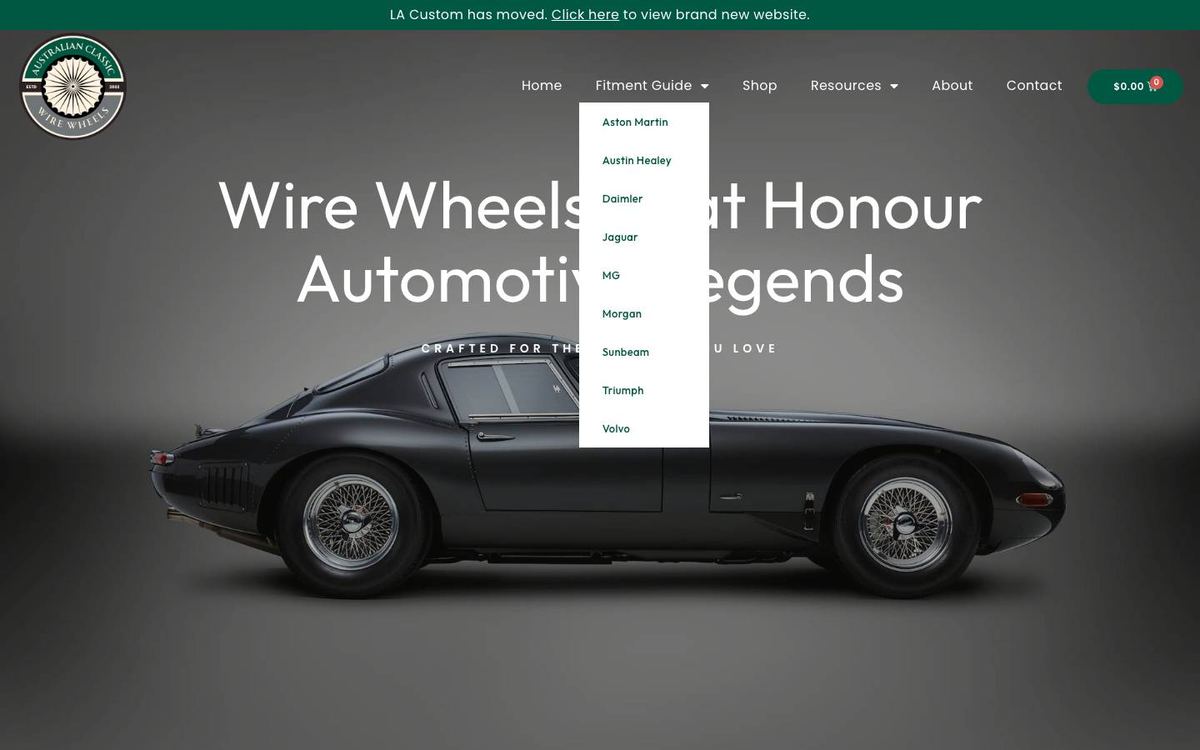
This store sells wire wheels, hubs, spinners and tyres for classic cars. The site was rebuilt around a fitment guide, listed in the main menu by make: Aston Martin, Austin Healey, Daimler, Jaguar, MG, Morgan, Sunbeam, Triumph and Volvo.
Result: 80% increase in key events after the rebuild with the fitment guide.
What to copy:
- Shop the way customers think. A classic car owner knows their car, not part numbers. The fitment guide starts there.
- Specialist proof up front: 30+ years in the British classic sports car world, named brands stocked, and local stock with dispatch within 24 hours.
- How-to resources, such as fitting Dunlop wire wheels and care instructions, which answer pre-purchase questions and attract search traffic.
Ayres The Label (children’s clothing, online store)
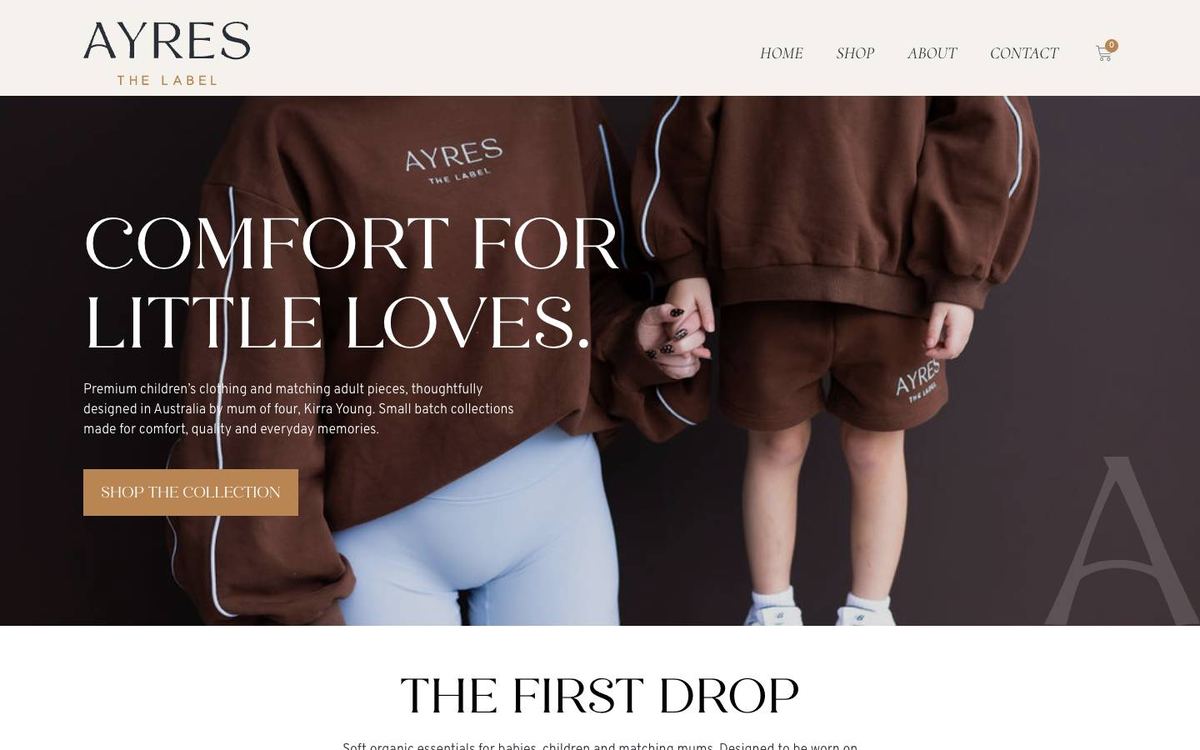
Ayres The Label was rebuilt from Shopify onto WooCommerce so it could run custom product drops. The homepage tells the founder’s story briefly, then pushes visitors to join the mailing list for “first access to new drops.”
What to copy:
- The business model shapes the site. Small batch releases sell out, so the main secondary action is the email list, not just “Shop.”
- Short trust points: designed in Australia, organic and premium fabrics, free shipping over $150.
Our ecommerce website page explains how we approach WooCommerce stores, and our guide to Shopify vs WooCommerce in Australia compares the two platforms.
Sport and clubs
Sports sites serve players, parents, volunteers and sponsors at once. The best ones put the action people come for, registering or checking the draw, front and centre.
Matt Bowen 9’s (junior rugby league tournament, Townsville)
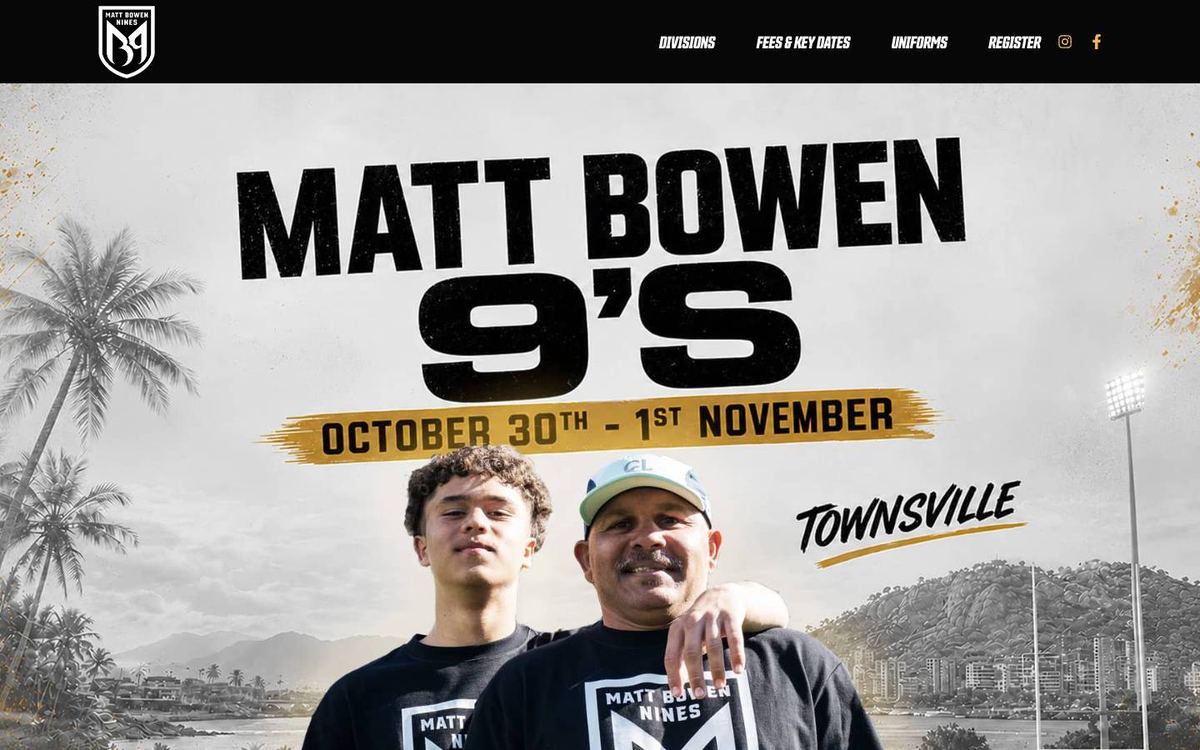
A first-year tournament site for under 8 to under 15 teams. The page is built around one action, “Register my team,” repeated after each section.
Result: 775 players registered in year one (website, registration portal, merch store and social ads).
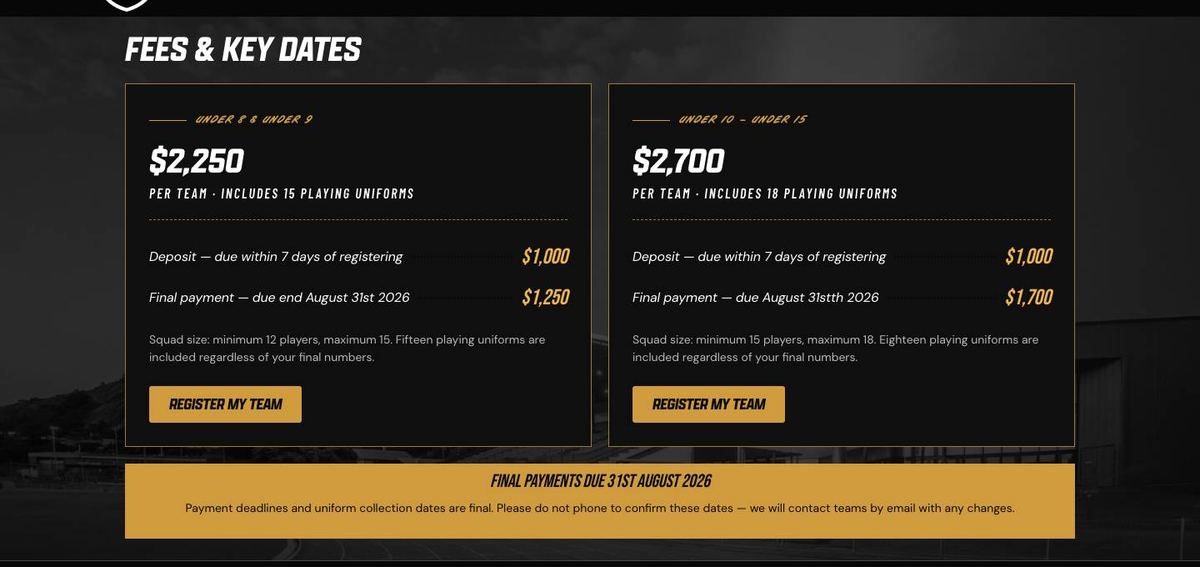
What to copy:
- Every question a team manager has, on one page: divisions, fees per team, what the fee includes, deposit and final payment dates, squad sizes and the uniform package.
- Firm dates stated plainly, with a note that changes will come by email. That cuts phone calls.
- The family experience sold alongside the footy: live entertainment, food trucks and activities.
Umina Bunnies RLFC (community rugby league club, Central Coast)
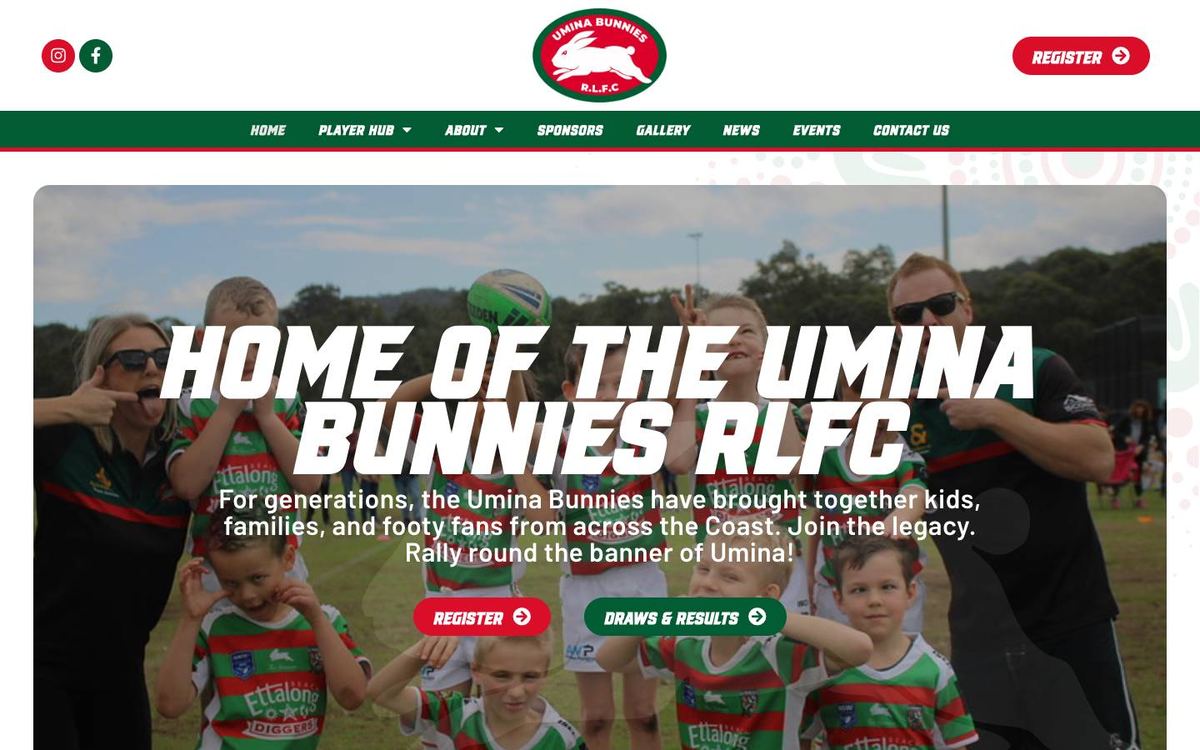
The club site menu puts “Register To Play” and “Draws & Results” under a Player Hub, with game day sheets, policies, a volunteer roster and sponsors all one click away.
What to copy:
- Navigation by audience. Juniors, ladies and seniors each have their own section.
- Sponsors given real space, which helps the club keep and win sponsors.
- News and events kept current, such as junior registrations and the volunteer roster.
See our sports marketing page for clubs and events.
Recruitment
Recruitment sites have two customers: employers who need staff and candidates who need work. Each needs its own path.
Indigeco (recruitment and labour hire, national)
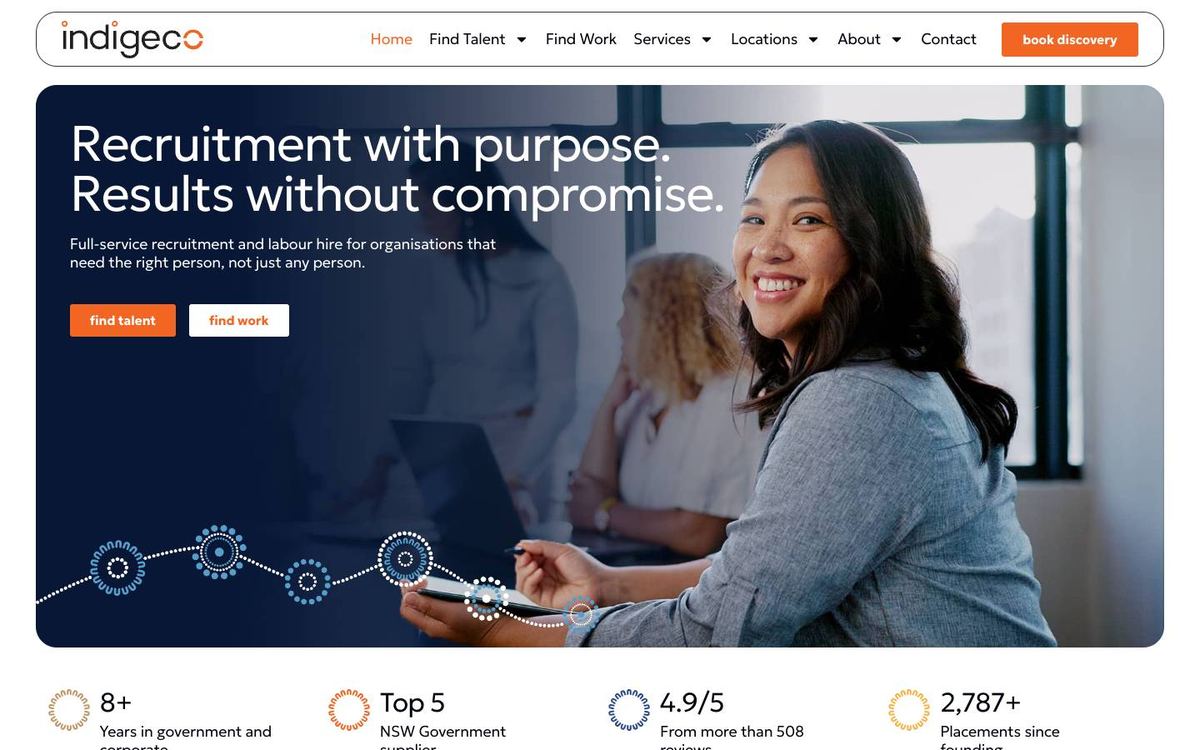
The headline, “Recruitment with purpose. Results without compromise.”, is followed by two calls to action: Find Talent and Find Work. The main menu splits the same way.
What to copy:
- Separate journeys for employers and job seekers, each with its own section on the homepage.
- Specialist pages by discipline and by city, such as labour hire in Sydney, Brisbane, Melbourne, Adelaide and the Gold Coast.
- Proof that matters to buyers: Supply Nation certified and majority Aboriginal-owned, with a section on how engagements count toward a Reconciliation Action Plan, plus a named client testimonial.
- Live jobs. The site syncs with Bullhorn so current roles stay up to date.
More on this in our recruitment websites page.
Hospitality
Hungry customers want to order, find you or check your hours, usually on a phone. Hospitality sites should get them there in one tap.
Papa V Pizza (pizza shop, Lake Haven, Central Coast)
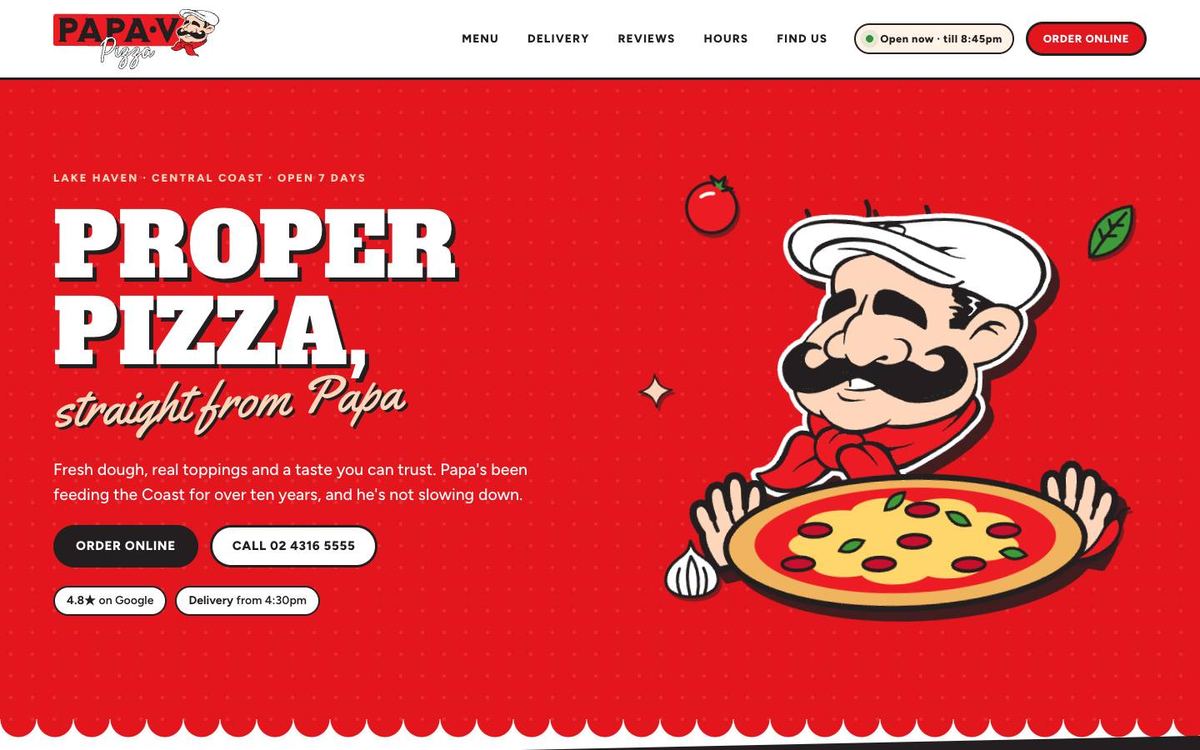
The headline is “Proper pizza, straight from Papa,” with “Order online” and the phone number right underneath, and the Google rating (4.8 stars) shown in the hero.
Result: 2,000+ website users in its first month.
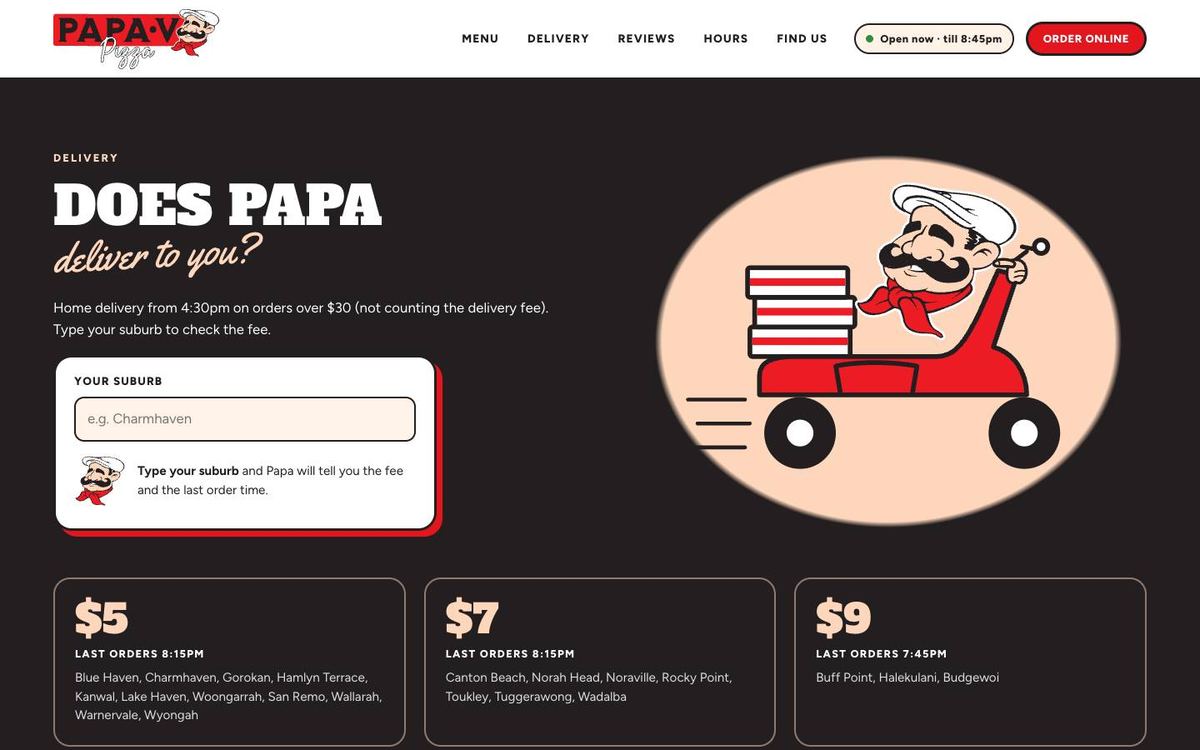
What to copy:
- The delivery question answered on the homepage. Suburbs are grouped by delivery fee, with last order times, so customers can check without ringing.
- Three steps to dinner: pick your pizzas, Papa fires them up, pick up or delivery.
- Local proof: Google reviews and the local sports clubs it sponsors.
- Hours and address near the bottom, where people look for them.
Not-for-profit
Not-for-profit sites need to explain the cause quickly, then give visitors an easy way to help.
More Pay In May (gambling awareness, national)
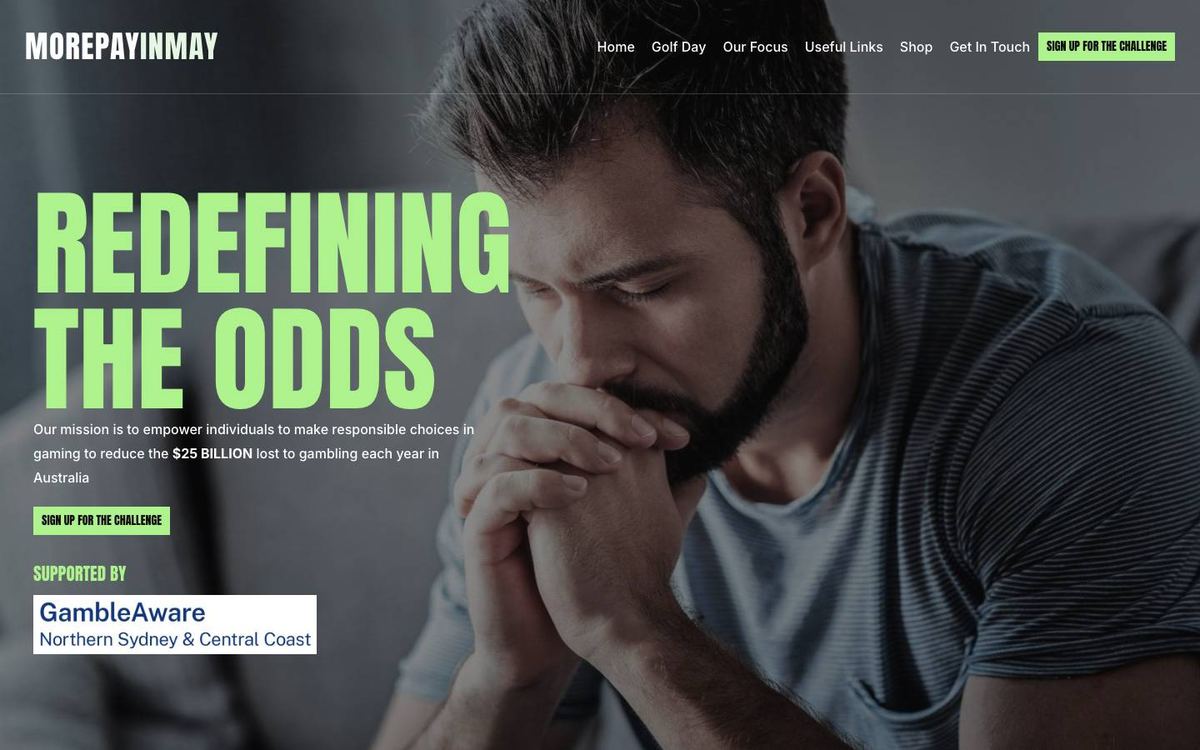
The homepage headline, “Redefining the Odds,” sits above a single action: “Sign Up For The Challenge,” a gambling-free month of May with friends, family or colleagues.
What to copy:
- One clear ask. Everything points to the challenge sign-up.
- The problem shown in numbers, with a stat section on gambling harm in Australia.
- Several ways to help: take part in events such as the charity golf day, spread the message, or partner with the organisation.
See our not-for-profit websites page for more.
How to use these examples for your own site
Pick the example closest to your industry, then copy the structure, not the look.
- Write your headline: what you do, for whom, where.
- List three or four proof points you can honestly claim.
- List every service or product range that deserves its own page.
- Decide your one main action, and where it appears on each page.
- Write down every question customers ask on the phone, and answer them on the site.
Our guide to website copywriting shows how to write each section, and our guide on what a website costs in Australia helps you budget.
Frequently asked questions
What should a small business website include?
At minimum: a clear headline saying what you do and where, your services or products, proof such as reviews and licences, contact details on every page, and an easy way to enquire. The business.gov.au setup guide suggests pages such as an “about us” page, contact details or a form, service descriptions, an online shop if you sell online, customer reviews and testimonials, FAQs, and terms and conditions. It also advises designing for mobile and for people with disability.
How many pages should a small business website have?
As many as you have distinct things customers search for, plus the basics. There is no official number. A simple local service business might need a homepage, one page per core service, a page per main service area, an about page, a contact page and a privacy policy. A single one-page site can work for a very simple offer, but it is hard to rank for several services from one page.
What makes a good website?
A good website helps the right customer do what they came to do, quickly. In practice that means a clear headline, easy navigation, fast loading on a phone, honest proof, and a visible next step. business.gov.au advises avoiding “overly fancy designs or gimmicks that might distract users from your content” and designing for mobile, since mobile devices are “responsible for over half of the world’s internet traffic”. Usability research backs short, scannable writing: in 1997, Nielsen Norman Group found 79% of test users scanned pages rather than reading word by word.
Want a site like these?
If one of these examples looks like what your business needs, the next step is a page plan for your own site. Keener’s website design process starts with customer and competitor research, then a plan with a clear job for every page, agreed before design starts.